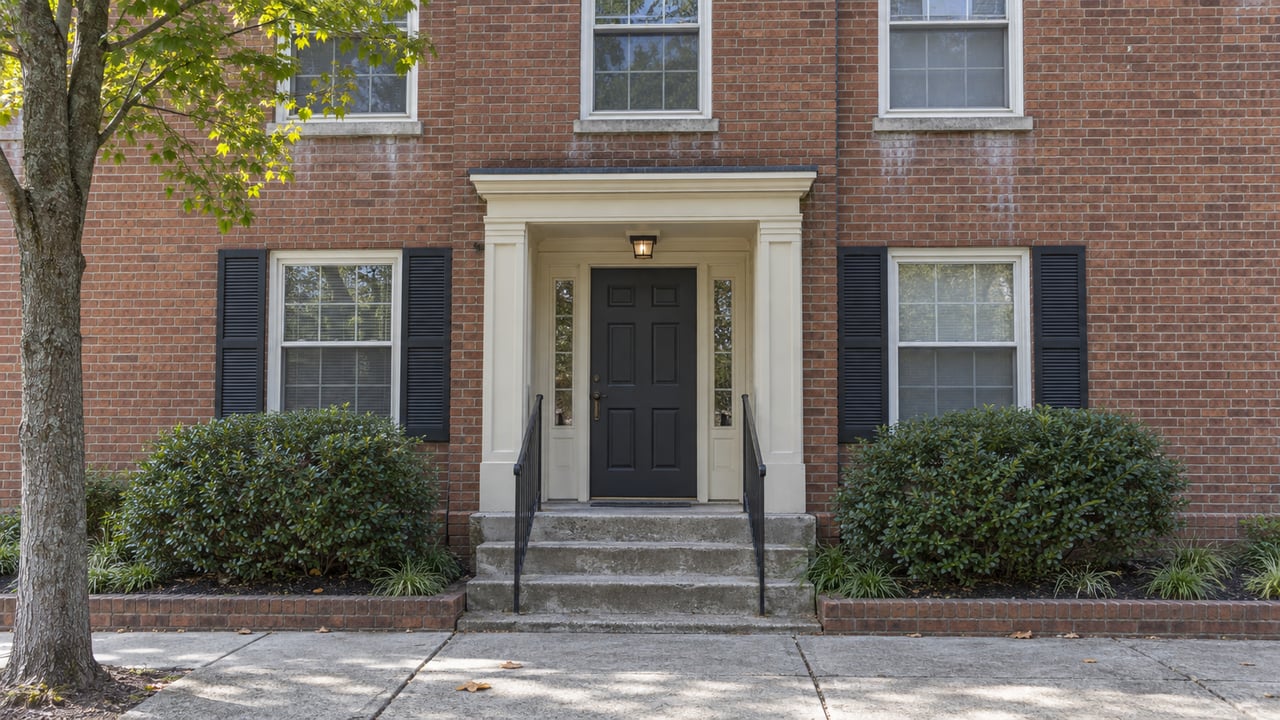
Pull up Del Ray's housing numbers on any given week this fall and the picture splits apart fast. One source puts the median sold price in the low $830,000s. Another, tracking the same month, shows a median asking price near $987,000. A tally of closed, detached-home sales across Del Ray and Rosemont lands above $1.1 million. Scroll to the condo listings inside Auburn Village and the median asking price drops to roughly $305,000. Every one of those numbers is describing Del Ray. None of them is wrong.
The gap isn't volatility and it isn't bad data. It's five different questions wearing the same label. Sold price and listed price aren't the same measurement. A median across every home type and a median limited to detached houses aren't the same measurement. A single month's snapshot and a six-month closed-sales study aren't the same measurement. A buyer who lifts "Del Ray's median" off one site and sets it next to another neighborhood's headline number is often comparing answers to different questions and calling it a fair fight.
What Each Number Is Actually Measuring
| What's being measured | Time window | Figure |
|---|---|---|
| Median sold price, all home types | March 2026 | $945,000 |
| Median sold price, houses only | November 2025 | $888,000 |
| Median sold price, closed transactions | February 2026 | $831,500 |
| Median listing (asking) price, active listings | February 2026 | $987,250 |
| Median closed price, fee-simple single-family only, Del Ray and Rosemont combined (zip 22301) | January 1 to June 18, 2026 | $1.19 million |
| Median asking price, condos only | current snapshot | $305,000 |
| Median asking price, townhomes only | current snapshot | $849,000 |
Look at February 2026 alone. The sold-price figure came in at $831,500. The same month's listing-price snapshot showed a median ask of $987,250, with 100 percent of asking price achieved and a median of 19 days on market. That's roughly $155,000 apart, in the same neighborhood, in the same month, because one number tracks what buyers paid and the other tracks what sellers asked for on homes still sitting on the market.
Then there's the fee-simple figure. A closed-sales analysis published in Alexandria Living Magazine, covering 51 detached single-family transactions across Del Ray and Rosemont's shared zip code between January 1 and June 18, 2026, put the median at $1.19 million with homes going pending in a median of five days. That figure excludes condos and multi-family units entirely, which is exactly why it sits well above every blended reading on the list.
Why the Spread Is This Wide
Del Ray's streets were laid out around the turn of the twentieth century to house workers at the adjacent Potomac Yard rail yard. The housing stock from that era is still standing: Cape Cods, bungalows, and even a few Sears Roebuck mail-order kit homes, mixed in with decades of additions and full renovations. That's one end of what "a Del Ray home" can mean.
The other end sits inside condo communities like Auburn Village, where one-bedroom units have recently listed around $305,000, and in rowhouse neighborhoods like Lynhaven and Warwick Village, where prices run closer to $825,000 to $849,000. Put a bungalow's closing price, a Lynhaven rowhouse's closing price, and an Auburn Village condo's asking price into a single blended median and the resulting number doesn't describe any specific kind of home a buyer would actually walk through.
The boundaries make this mix structural rather than accidental. Del Ray runs from East and West Glebe Road on the north down to Mount Vernon Avenue, Leslie Avenue, and Glendale Avenue on the south, bordered by Jefferson Davis Highway on the east and Russell Road and Braddock Road on the west. That's enough ground to hold a 1920s bungalow, a mid-century garden condo building, and a newly built custom home on the same street grid, all reporting into the same neighborhood-level statistic.
The Other Half of the Gap: Asking Versus Closing
Del Ray's own competitiveness widens the sold-versus-listed gap further. The neighborhood has scored 96 out of 100 on a standard competitiveness index, with homes historically going pending in a matter of days and multiple offers common, some with contingencies waived. In a market moving that fast, the asking price and the closing price for the same house can diverge inside the same week, and the direction of that gap shifts with each listing.
A listing-price median describes what sellers are currently asking. A sold-price median describes what buyers actually paid, on homes that may have gone under contract weeks earlier at whatever the market supported at that moment. Sample Del Ray at the listing stage and again at the closing stage and it's possible to land on two headline numbers that never cross paths, without either one representing a discount or a markup. They're answering different questions about different points in the same transaction.
The Number Is About to Move Again, for a Reason That Has Nothing to Do With Home Values
New construction is adding to the condo side of Del Ray's ledger. Del Ray Place, a roughly 49-unit condo project on Mount Vernon Avenue, has been under construction with crews actively on site. When those units start closing, they'll report into the same "all home types" figure as the bungalows and rowhouses, at price points much closer to Auburn Village's than to the neighborhood's detached-home comps.
A buyer who checks Del Ray's blended median again once those closings show up in the data may see it shift without a single existing house changing in value. The move will come from the mix of what's closing, not from what any individual property is worth. That's worth flagging now, before the shift shows up as a headline that reads like a market correction.
What to Actually Compare
Before treating Del Ray's median as comparable to another neighborhood's number, the sorting question is simple: sold or listed, single property type or a blend, and over what window. Citywide context is moving too. In August 2026, Alexandria's median sale price rose to $752,500, up 9.1 percent year over year, while the number of homes sold fell 28.6 percent to 130, according to Northern Virginia Association of Realtors figures reported by The Alexandria Brief. A neighborhood premium measured against a citywide median that itself moved on falling volume, not rising demand alone, is one more layer worth checking before drawing a comparison.
For a buyer with a specific budget and a specific property type in mind, the useful number isn't any single headline median on this list. It's the sold price for homes matching on type, size, and closing date, inside Del Ray's actual boundaries, over the last several weeks rather than the last two quarters.
Frequently Asked Questions
Why does one site show a different Del Ray median than another? They're often measuring different stages of the same transaction. Sold-price figures reflect closed deals. Listing-price figures reflect current asking prices on homes still on the market. In February 2026 those two readings sat roughly $155,000 apart for Del Ray.
Is Del Ray still moving as fast as its reputation suggests? By competitiveness scoring, yes. Del Ray has ranked 96 out of 100, with homes historically going pending in about five days and multiple offers common. That pace is part of why sold and listed figures separate as much as they do.
Should I use the fee-simple single-family figure or the blended figure when judging Del Ray? It depends on what's being purchased. A buyer shopping detached homes will find the fee-simple single-family figure, which excludes condos and multi-family units, closer to what they'll actually pay. A buyer comparing Del Ray's overall market health against another neighborhood's should use a blended figure, provided the other neighborhood's number is built the same way.
If you're trying to figure out which of these numbers actually applies to the home you're comparing, or how Del Ray's mix of bungalows, rowhouses, and condos stacks up against a specific neighborhood you're weighing it against, Adrianna Vallario can pull the closed comps that match your exact property type and timeline, and start with a free valuation built on that slice of the market rather than a blended headline.