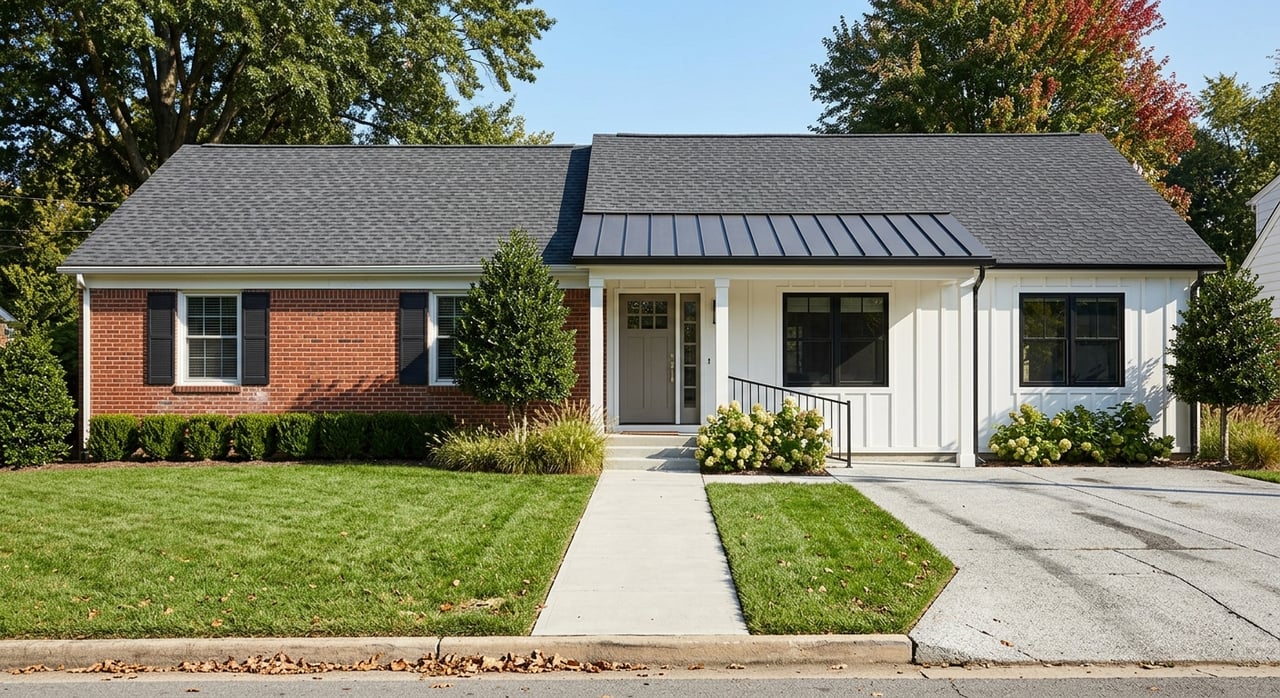
If you are house hunting in Fort Hunt, one question can shape your entire search: should you buy an original home with future potential, or pay more for one that is already renovated? In a neighborhood where many homes date to the 1940s and 1950s, that decision is rarely just about finishes. It is about layout, lot, permits, upkeep, and how you want to live day to day. This guide will help you compare both paths so you can make a smarter move in Fort Hunt. Let’s dive in.
Why this choice matters in Fort Hunt
Fort Hunt is not a one-size-fits-all housing market. The area has about 16,700 residents, a high owner-occupied rate of 94.1%, and a median owner-occupied home value of $927,400 according to the Census Bureau. Recent market data also points to a competitive environment, with Redfin reporting a median sale price of $999,484 for the three months ending April 2026.
That means buyers often have to make quick decisions in a market where condition can influence price just as much as square footage. Redfin reported homes selling in about 25 days with a 101.4% sale-to-list ratio, while Zillow reported median days to pending at 7 as of April 30, 2026. In a low-turnover, mostly single-family market like Fort Hunt, the difference between original and renovated can have a real impact on both your budget and your long-term plans.
What “original” usually means here
In Fort Hunt, original homes often mean detached postwar houses built in the 1940s or 1950s. Across Fairfax County’s postwar neighborhoods, common forms included Ranch, Split-Level, Minimal Traditional, and Two-Story Massed styles. In neighborhoods like Hollin Hall Village, parcel records show a common pattern of modest original footprints on sizable lots, with later additions added over time.
That original condition can look very different from house to house. One home may be largely untouched, while another may have an older kitchen update, a small addition, or a partially reworked basement. In practical terms, an original home often offers a strong location and lot, but an interior that may not fully match modern preferences for open layouts, storage, bath count, or updated systems.
Common strengths of original homes
Original homes can be appealing for a few clear reasons:
- You may get a better lot or location for the price
- You can shape updates around your own priorities
- Some homes retain appealing architectural details and proportions
- You may avoid paying a premium for finishes you would have changed anyway
In Fort Hunt, this can be especially relevant because the area includes distinct housing eras and neighborhood identities. Hollin Hall Village dates to 1943, Tauxemont began in 1941 and was completed by the late 1940s, and Hollin Hills was built from 1946 to 1971 with a well-known modernist design character.
Common tradeoffs of original homes
The tradeoffs are just as important to understand before you make an offer.
- Layouts may feel closed off compared with newer expectations
- Closets and storage may be limited
- Mechanical systems may need attention sooner
- Kitchens and baths may be functional but dated
- Renovation costs can add up quickly after closing
If you are considering an original home, the key question is simple: can you comfortably live with the current floor plan and condition for a while, or are you buying a project from day one? Your answer will affect not only your budget, but also your timeline and stress level.
What “renovated” can mean in Fort Hunt
A renovated Fort Hunt home can range from lightly updated to nearly rebuilt. Fairfax County’s residential addition and alteration permit category includes renovations, finished basements, decks, dormers, sunrooms, additional square footage, and second-story additions. So when you see the word “renovated,” it helps to ask exactly what was done.
Some homes have mostly cosmetic updates, such as paint, flooring, cabinets, and fixtures. Others have significant structural changes, including expanded kitchens, added bedrooms, larger primary suites, or full second-story additions. In Fort Hunt, where many homes started with modest footprints, expansion is common enough that the documentation behind the work matters almost as much as the design itself.
Benefits of renovated homes
For many buyers, renovated homes offer convenience and predictability.
- You may be able to move in with fewer immediate projects
- Updated layouts may better fit current living patterns
- Newer systems can reduce near-term maintenance surprises
- Expanded square footage may improve day-to-day function
In a competitive market, that convenience often comes at a premium. Still, for buyers who are short on time, relocating from out of area, or trying to avoid a major post-closing project, a well-renovated home can be the simpler path.
Risks to watch in renovated homes
A polished finish does not always tell the full story. A renovated home should be evaluated beyond surface appeal.
Pay close attention to:
- Whether the work was permitted
- Whether final inspections were completed
- Whether electrical, plumbing, and mechanical permits were pulled when needed
- Whether the addition feels integrated with the original house
- Whether the changes fit the lot and overall streetscape
In Fort Hunt, long-term value appears to favor homes with good lots, functional plans, and well-documented improvements, not just cosmetic updates. That is especially true in a market shaped by stable single-family neighborhoods and compatible infill expectations.
How neighborhood character affects your decision
Fort Hunt includes several distinct neighborhood patterns, and that can influence whether original or renovated makes more sense for you.
Hollin Hills is Fairfax County’s best-known modernist enclave in the area, with 463 single-family homes featuring open floor plans, floor-to-ceiling windows, low-pitched or butterfly roofs, and modular construction. If you are considering a home there, preserving architectural character may matter more than applying a standard renovation formula.
That is also important because Hollin Hills became a Historic Overlay District in 2022. Fairfax County says the Architectural Review Board reviews rehabilitation, new construction, and exterior alterations in Historic Overlay Districts. So if you are looking at a renovated home there, or planning future changes to an original one, the review process is a key part of your due diligence.
Other Fort Hunt neighborhoods may not have that same review layer, but the broader planning context still matters. Fairfax County describes the Fort Hunt community planning sector as mostly single-family detached, with stable residential neighborhoods and infill expected to remain compatible with the existing pattern.
Due diligence items that matter most
Whether a home is original or renovated, a few checks carry extra weight in Fort Hunt.
Review permits and inspections
Fairfax County requires a building permit for a new addition to an existing home, and its addition and alteration guidance notes that inspections are required once work begins. If a house has been expanded or significantly updated, ask for the permit record and evidence of final inspections.
For buyers, this helps answer an important question: are you paying for improvements that were completed properly, or just paying for a nicer look? In a neighborhood where many homes have evolved over decades, that difference matters.
Consider lead-paint exposure
Because much of Fort Hunt’s housing stock dates to the 1940s and 1950s, lead-paint awareness is important. The EPA says homes built before 1978 are more likely to contain lead-based paint and recommends assuming they do unless testing shows otherwise. It also says renovation, repair, and painting work in pre-1978 homes should use lead-safe practices and certified firms.
That does not mean every older home is a problem. It means you should go in informed, especially if you expect to renovate soon after purchase.
Look closely at drainage and moisture
Drainage is another issue worth extra attention in Fort Hunt. Fairfax County materials tied to nearby stormwater and watershed work reference erosion, runoff management, floodplain wetlands, and stream restoration in areas connected to Paul Spring Branch and Little Hunting Creek.
For you as a buyer, that means it is smart to ask detailed questions about grading, downspouts, basement moisture, and any history of water intrusion. This is especially important with older homes and homes that have been expanded, where site drainage may have changed over time.
Original vs renovated: which buyer are you?
There is no universal right answer. The better choice depends on your timeline, budget, tolerance for projects, and how specific your needs are.
An original home may fit you if:
- You care most about lot, location, and long-term upside
- You are comfortable living with some dated features
- You want to renovate in phases over time
- You would rather customize than pay for someone else’s choices
A renovated home may fit you if:
- You want convenience right away
- You have limited time for post-closing work
- You are relocating and want fewer moving parts
- You prefer a more predictable near-term budget
In Fort Hunt, many buyers are really deciding between paying less now and planning a project or paying more for convenience and verifying the work carefully. Both can be smart choices if the home aligns with your goals and the paperwork supports the condition.
How to think about value in Fort Hunt
In a market around the $1 million mark, value is rarely just about the biggest house or the newest kitchen. In Fort Hunt, value often comes from the combination of a good lot, a functional layout, and improvements that are visible, sensible, and documented.
That is one reason some original homes remain so compelling. If the bones are solid and the lot is strong, you may have room to improve the home over time in a way that fits your needs. On the other hand, a renovated home may justify a higher price if the expansion is thoughtful, the systems are updated, and the permit trail is clear.
The best move is usually the one that matches your real life. A beautiful renovation is not a bargain if it stretches your budget and still leaves unanswered questions. An original home is not automatically a better deal if the renovation path is larger than you can realistically take on.
If you are weighing both options in Fort Hunt, a neighborhood-first approach can make the decision much clearer. The right house is not just the one that photographs well. It is the one that fits your plans, your timeline, and the way this market actually works.
If you want help comparing homes in Fort Hunt, evaluating renovation history, or deciding which path gives you the strongest long-term fit, reach out to Adrianna Vallario.
FAQs
What does an original home in Fort Hunt usually mean?
- In Fort Hunt, an original home usually refers to a detached house built in the 1940s or 1950s with much of its earlier layout or design still intact, even if small updates or additions were made over time.
What should buyers check in a renovated Fort Hunt home?
- Buyers should review the scope of the renovation, permit history, final inspections, and any related electrical, plumbing, or mechanical permits, especially if the home was expanded.
Are original homes in Fort Hunt cheaper than renovated homes?
- They often start at a lower price than fully renovated homes, but the total cost depends on how much work you plan to do after closing and how quickly those updates are needed.
Why do permits matter when buying in Fort Hunt?
- Fairfax County requires permits for many additions and alterations, and permit records help you confirm that work was reviewed and inspected rather than just completed for appearance.
Do Fort Hunt buyers need to think about lead paint?
- Yes. Because many homes in Fort Hunt were built before 1978, buyers should be aware of possible lead-based paint and use care when planning future repairs or renovations.
Does Hollin Hills have different renovation rules?
- Yes. Hollin Hills is a Historic Overlay District, and Fairfax County says exterior alterations, rehabilitation, and new construction there are reviewed by the Architectural Review Board.