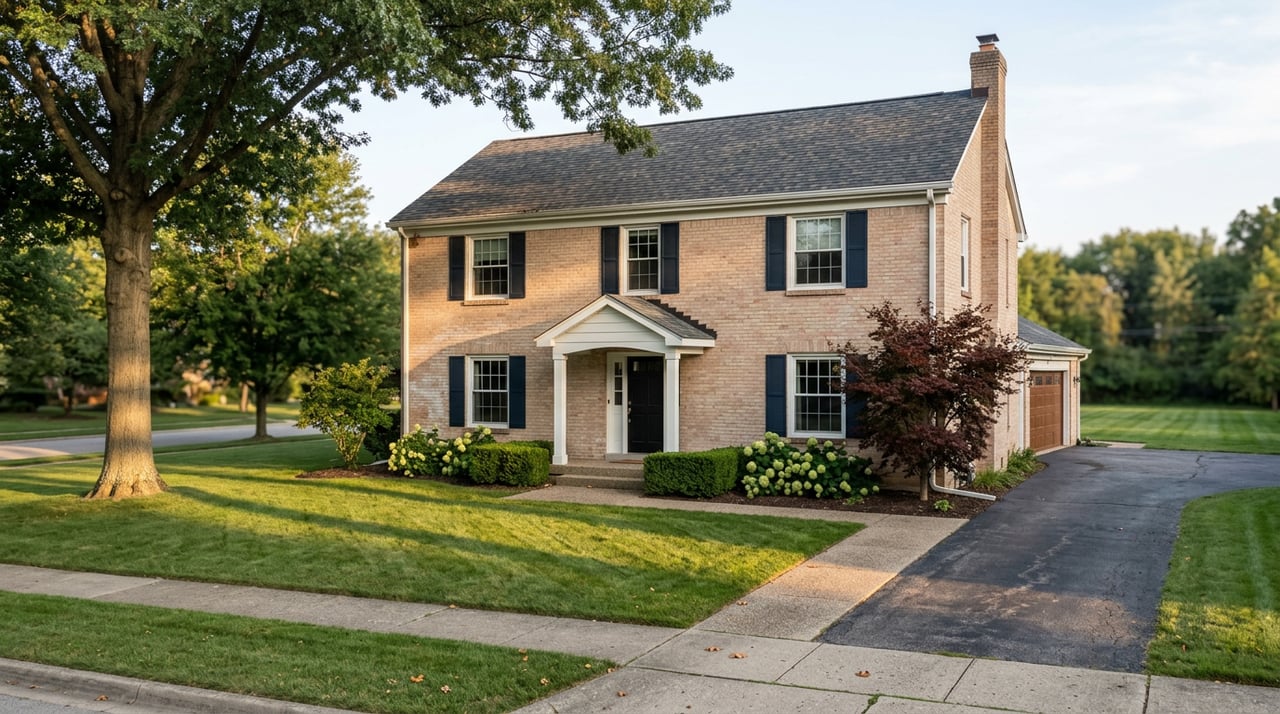
Why does a house with an Alexandria, VA address come with a Fairfax County property assessment, a Fairfax County Public Schools assignment, and a permit process that has nothing to do with the Alexandria you've been reading about all month? It's the question almost every buyer asks somewhere around their third Fort Hunt showing, usually right after their agent mentions a school boundary or a county tax rate that doesn't match anything they've seen for Del Ray or Old Town.
The short answer: Fort Hunt's mailing address and its government are two different things, and the gap between them is bigger than most buyers expect when they start comparing "Alexandria" neighborhoods side by side.
One ZIP Code, Two Governments
The 22308 ZIP code, along with part of 22307, sits in unincorporated Fairfax County. It has never been part of the City of Alexandria. The "Alexandria" in the address comes from the post office that historically served the area, not from any municipal boundary. Old Town, Del Ray, Rosemont, Potomac Yard, Beverley Hills, North Ridge, and Jefferson Park all sit inside the actual City of Alexandria and answer to Alexandria's City Council, Alexandria City Public Schools, and Alexandria's own tax office. Fort Hunt answers to the Fairfax County Board of Supervisors, Fairfax County Public Schools, and a separate assessment and permitting system entirely.
That distinction rarely shows up on a portal listing. It shows up in the closing documents, the school assignment letter, and the first property tax bill.
What Actually Changes When You Cross the Line
A handful of things quietly shift the moment a listing sits in Fairfax County's Fort Hunt rather than the City of Alexandria:
Who taxes you. Fairfax County sets its own real estate tax rate and runs its own assessment cycle, separate from the City of Alexandria's. For 2026, the county's rate landed at $1.1225 per $100 of assessed value, and the Mount Vernon District, which covers Fort Hunt, saw its average residential assessment rise 3.99 percent for the year. That's a county number on a county calendar. It has no relationship to whatever the City of Alexandria does with its own budget in the same tax year.
Who assigns your schools. Fort Hunt children attend Fairfax County Public Schools, not Alexandria City Public Schools. Locally that means schools like Waynewood Elementary, Carl Sandburg Middle School, and West Potomac High School, all part of the county system with its own separate boundary process. The county's Board recently completed its first comprehensive boundary redraw in 40 years, adopted on January 22, 2026. That kind of once-a-generation change is exactly the sort of thing that can shift which building a child attends without a single Fort Hunt property line moving an inch.
Who handles your sewer line. Every property in the City of Alexandria connects to public sewer through Alexandria Renew Enterprises. Fairfax County runs its own wastewater system, and while most of Fort Hunt is on public sewer, any property still relying on a septic system falls under the county's Health Department, not the city's. The county's own count shows roughly 24,000 homes across all of Fairfax County still using septic tanks rather than a sanitary sewer connection, a reminder that "public sewer" isn't automatic just because a neighborhood is built out and established.
Who reviews your renovation. Old Town buyers get used to hearing about the Board of Architectural Review. Fort Hunt doesn't have one, because the City of Alexandria's BAR only has authority inside the city. A Fort Hunt renovation runs through Fairfax County's own zoning and permitting process instead, with its own timelines and its own staff.
None of this makes Fort Hunt a harder place to own a home. It makes it a different jurisdiction wearing a familiar-sounding name, which is exactly the kind of thing that trips up a buyer who assumes "Alexandria" means one consistent set of rules across every neighborhood carrying that name.
The Number That Depends on Which Report You're Reading
Here's where the market data gets genuinely interesting, and where two honest numbers can tell two different stories.
One widely used home-value estimate for Fort Hunt currently shows the average home value just over $1 million, down slightly, about half a percent, over the past year. Read on its own, that sounds like a market cooling off.
But look at actual closed sales in the 22308 ZIP code and a different picture appears. In February 2026, the area recorded 14 closed sales at a median sold price of $1,144,500, a jump of 21 percent over the same month a year earlier. Inventory in that window sat below one month of supply, well under the six months typically considered a balanced market.
Both numbers are accurate. They're just measuring different things. A broad average-value estimate smooths out month-to-month noise across an entire area's housing stock, while a closed-sale median in a specific ZIP code reflects what actually changed hands, in a market so thin that a handful of large or small sales can swing the number hard in either direction. In a low-inventory pocket like Fort Hunt, the closed-sale figure is the one that reflects what a buyer is actually competing against right now, not what an algorithm estimates the broader area is worth on average.
That gap matters for anyone comparing Fort Hunt to a City of Alexandria neighborhood using a single median price pulled from a portal. The number on the screen might be measuring a completely different kind of market movement than the one you'd assume from a glance.
The Assessment Letter Isn't Coming From the City
Every Fort Hunt property owner gets a real estate assessment notice from Fairfax County, typically mailed in February, and anyone who believes theirs is off has a set window, through March, to file an Application for Review with the county. That deadline, that form, and that appeal process belong to Fairfax County alone. A City of Alexandria homeowner in Del Ray or Rosemont goes through an entirely separate city assessment cycle, on a separate timeline, appealed through a separate office.
For a buyer weighing a move from a City of Alexandria neighborhood into Fort Hunt, this is the practical version of the jurisdictional split: not an abstract fact about governance, but an actual envelope that shows up in the mail on a different schedule, from a different government, with a different appeals process if something looks wrong.
What This Means If You're Comparing Neighborhoods
None of this is a reason to rule Fort Hunt in or out. Plenty of buyers specifically want the proximity to the George Washington Memorial Parkway, the protected green corridor along the Potomac River, and the quieter, larger-lot feel that comes with Fairfax County's zoning rather than the City of Alexandria's denser historic districts. The point is simpler: know which government you're actually buying into before you compare a Fort Hunt listing to one in Old Town or Del Ray using the same mental yardstick. The tax rate, the school system, the permit office, and the utility structure all belong to a different jurisdiction, even though the envelope says Alexandria.
Frequently Asked Questions
Is Fort Hunt part of the City of Alexandria? No. Fort Hunt sits in unincorporated Fairfax County. The Alexandria name on the address comes from the postal service area, not a municipal boundary.
Do Fort Hunt homes pay Alexandria City taxes? No. Fort Hunt properties are assessed and taxed by Fairfax County, on the county's own assessment cycle and rate, separate from anything the City of Alexandria sets for its own residents.
Which school system serves Fort Hunt? Fairfax County Public Schools, not Alexandria City Public Schools. The county completed its first comprehensive school boundary redraw in 40 years in January 2026, which is worth checking against any specific address you're considering.
If you're weighing a move between a City of Alexandria neighborhood and a Fairfax County pocket like Fort Hunt, it helps to have someone walk through what actually changes on each side of that line before you're comparing two different governments as if they were one market. Adrianna Vallario has spent her career inside these Alexandria-area neighborhoods and can help you sort out which "Alexandria" you're really looking at. Reach out for a conversation, or get your free Alexandria home valuation to see where your own numbers stand.